Dreaming of stepping out the back door to pick tonight's dinner, from a veggie patch grown by YOU?
In this mentored online course, Hannah Moloney from ABC's Gardening Australia shows you how to design, plant and grow a veggie patch that feeds your household in all four seasons.
Bookings are open now!
Bookings close in 2 days 3 hours, and the class starts on Monday 7 December(Sydney time).
Good news - bookings are still open for you, for the class that starts on Monday 7 December(Sydney time).
You're in early! Bookings are open for you a whole day before everyone else
Bookings open once a season, and the next class opens on Monday 16 November(Sydney time).
Bookings open to everyone on Monday 16 November at 9 am(Sydney time).
Bookings for the October class have closed now, sorry! The next class opens on Monday 16 November(Sydney time), and if you join the waitlist below, we'll let you know the moment it does - and you'll get in early before everyone else.
And you'll start on Monday 7 December right alongside everyone else, with every weekly lesson arriving on the same schedule.
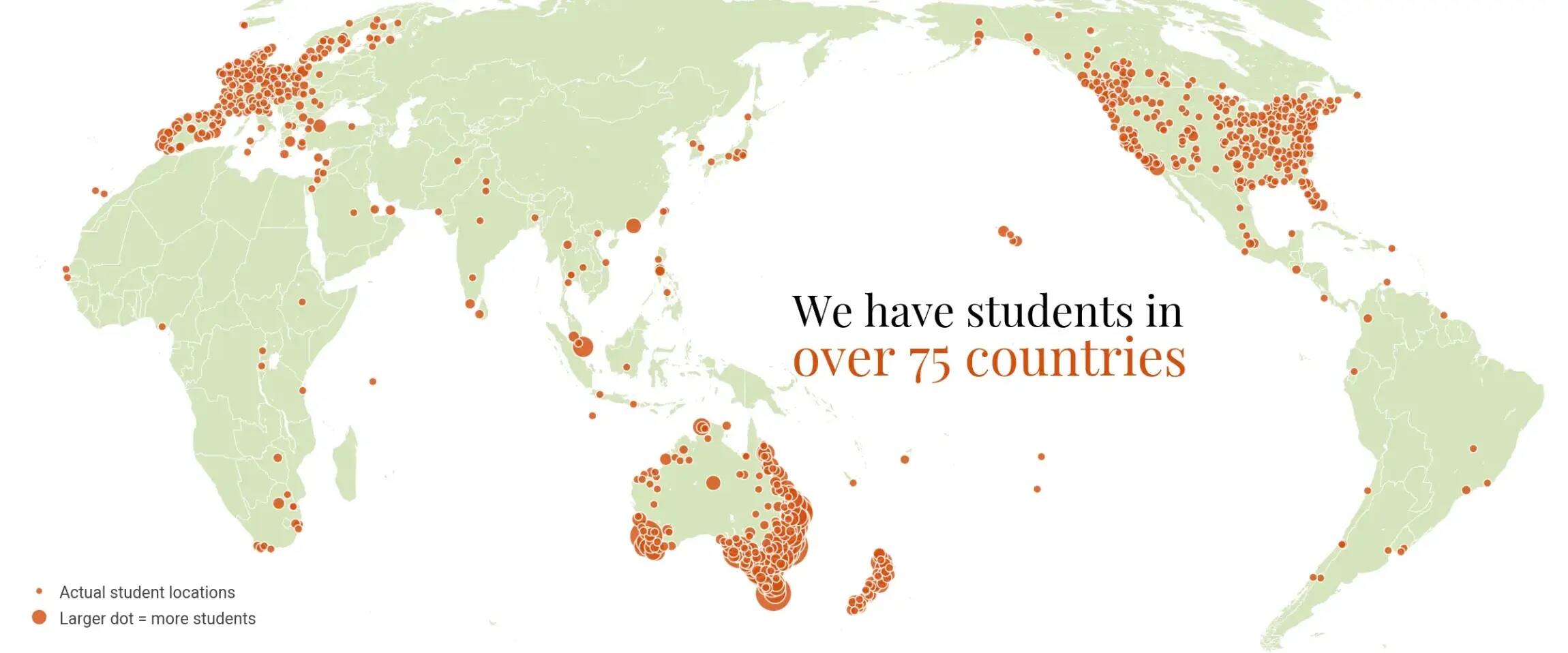
Become part of our community of 1350+ veggie gardeners enrolled in this course.
Bookings open
Monday 16 November, 9 am(Sydney time)
Class starts
Monday 7 December 2026(Sydney time)
Dates and times are in Sydney time.
8 weeks, 1-2 hours per week
For beginner → intermediate gardeners
Lifetime access, at your own pace
Personal mentoring, with no end date
Become part of our community of 1350+ veggie gardeners enrolled in this course.
Keen to join the class that starts on Monday 5 October(Sydney time)? Get in touch.
Here's how we'll get you growing
Mentored for as long as you need
Ask a question in any lesson and one of us will answer you personally, usually within a day or so. And there are live Q&A calls every two weeks, a private student community to swap tips in, and no end date on any of it.
We rotate the live call times to suit different time zones. And every call is recorded, so if you miss one, no worries... catch the replay.
Learn in a small, friendly group, once a season
We open bookings once a season, and the whole class starts together. So the gardeners you'll meet on the live calls and in the community are a small, friendly bunch starting out alongside you... asking the questions you were about to ask.
Taught by Hannah Moloney, from ABC's Gardening Australia
Hannah teaches your lessons, with all the infectious enthusiasm of a life-long gardener. And Kirsten Bradley and Nick Ritar, who founded Milkwood in 2007, mentor you all the way through.
Hannah teachesKirsten mentorsNick mentors
A planting guide made for your garden
Your Veggie Planting Guide reads thirty years of daily weather for the spot where your garden is. And it tells you what to sow, plant out or start in trays this month, either side of the equator. Yes, you CAN grow a garden where you live (at least some of the year!) - and if some tweaks are needed for your climate or country, we'll assist you personally.
A seed-tray window, as a northern guide prints it
J
F
M
A
M
J
J
A
S
O
N
D
The same window, read for a southern garden
J
F
M
A
M
J
J
A
S
O
N
D
a good monthpossible
An illustration from the Veggie Planting Guide, not advice for any one place.
“Starting a vegetable garden from scratch was totally overwhelming and now I have a structured path to follow - from planning to harvesting and all of the steps in between.”
Liza L. · Catalonia, Spain
“I was at first hesitant to enrol in an on-line course. I wanted to attend in-person, connect with others, and see for myself a permaculture garden. Now, I am Milkwood's biggest fan...”
Simona T. · lutruwita / Tasmania
“When the kids visit they love walking around the path, seeing what's happening in the garden and what they can pick to eat.”
Paula E. · Victoria, Australia
“I questioned whether an online course could truly provide the depth of knowledge and practical guidance I was seeking... I decided to give it a go, and I am so glad I did!”
Paul S. · Canberra, Australia
“I wanted to take my veggie gardening to a higher level after years of scratching around not really achieving the huge yields of veg and fruit that I had hoped for to support my family. This course was a dream!”
Catherine B. · Hobart, Tasmania
“We now have beds that are pumping and are certainly putting our newly gained knowledge to good use in learning how to grow, harvest, and preserve for the months ahead.”
Rani H. · Cygnet, Tasmania
... who are growing everywhere from Catalonia to Canberra.
Jennifer's garden, Benalla, Victoria
98%of the students who fill in our end-of-course survey rate this course 4 or 5 out of 5.
Jennifer did this course from Benalla, in north-east Victoria, after renting for most of her life. This is her garden now... and here's what she told us about getting there.
“I have been a renter most of my life and for the first time in my life I have a garden! A neighbour visited me and looked at my garden and paid me the ultimate compliment by saying to me "you are a great gardener!"
What the organic veggie gardening course has done for me is give me the skills to plan and execute. Before this I was soaking up so much information and knowledge about gardening. But I was scattered and undisciplined in what I did. I was heading in the right direction, Now it is like I am taking the direct route instead of heading down dead end lanes.”
Jennifer J. · Benalla, Victoria
The skills you need to get growing
Inside your Organic Vegetable Gardening course, week by week, we'll help you get the hands-on skills to grow great veggies using organic principles and permaculture thinking, so you can:
DESIGNBUILDGROWHARVEST
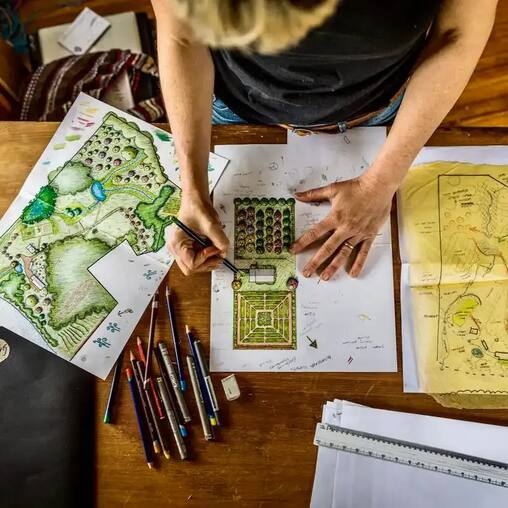
Design your best-ever veggie patch, from scratch
Build garden beds that suit your garden
Build super-healthy soil, no matter where you live
Grow from seed and raise your own seedlings, to save money and build resilience
Your Veggie Planting Guide, made for your garden's own climate
Your Garden Planner Workbook
Lifetime access to all of it
Here's the Full Course Curriculum
Step-by-step lessons, expert tips and bonus modules to grow an abundant veggie patch for life.
8 weeks, 47 lessons and about7 hours of video.
Getting startedStraight away · 3 lessons · 29 min
Meet your teachers, get your bearings, and say hello in the Veggie Gardening Community before we start designing.
Welcome & meet your teacher
Meet Nick and Kirsten from Milkwood and your course presenter, Hannah Moloney, and come and say hello in the Veggie Gardening Community.
Video, 5:44
About this course & permaculture
What 'organic' and 'permaculture' really mean for a veggie patch, the ethics and principles behind them, and what's coming up week by week.
Video, 10:26
Downloads: Introduction to permaculture - from Milkwood's Permaculture Living book
How this course works
A tour of the course platform, how the weeks unfold, how much time and money to set aside, and the Veggie Garden Planner you'll use all the way through.
Video, 12:57
Downloads: Veggie Garden Planner
Designing your gardenWeek 1 · 4 lessons · 34 minplus an extra module
Every good veggie patch starts with design. So this week you'll get to know your people and your place, and sketch out where everything will go.
We start with design
The stages of garden design, the art of observation, and how to use permaculture zones to decide where your veggie patch belongs.
Video, 6:48
Downloads: Veggie Garden Planner
People - who is this garden for?
Who'll use this garden, now and in ten years? Answer the planning questions, weigh up your time, budget and mobility, and write your Goal Statement.
Video, 7:41
Place - what does the landscape tell you?
Make a Base Map of your place, map what you notice by theme - water, access, trees, microclimate and more - then pull it all together into a Summary Map.
Video, 9:07
Downloads: How to make a simple Base Map · How to make a Summary Map · The Permaculture Design Style Guide
Initial concept design - what will go where?
Turn your people and place notes into a Bubble Diagram, your first concept design, and work out where your veggie beds should sit (even on a tricky site).
Video, 9:55
Downloads: How to make a Bubble Diagram
Drawing a detailed garden design
Optional extra module · 1 lesson · 12 min
For keen designers! Awesome skills, and totally fine to leave for later.
Drawing a detailed garden design
Choose a scale, make a To-Scale Base Map and turn your Bubble Diagram into a detailed design, so you know what fits and how much material you'll need.
Video, 12:08
Downloads: Choose a scale (metric) · Choose a scale (US) · How to make a To-Scale Base Map · How to turn your To-Scale Base Map into a Detailed Garden Design · Trilateration · The Permaculture Design Style Guide
Knowing your soil & establishing your gardenWeek 2 · 7 lessons · 48 min
Healthy soil is where every good harvest begins. Get to know yours, then choose and build the garden beds that suit your place.
What is soil?
Soil structure, biology and chemistry, the main soil types and horizons, and the pH most veggies like best.
Video, 8:22
Getting to know YOUR soil
Take a soil sample and run simple jar, ribbon and pH tests at home. And if your soil turns out to be a problem, there's a solution for that too.
Video, 7:59
Downloads: Soil sampling & testing · Soil Solutions · Soil texture: the manipulation test
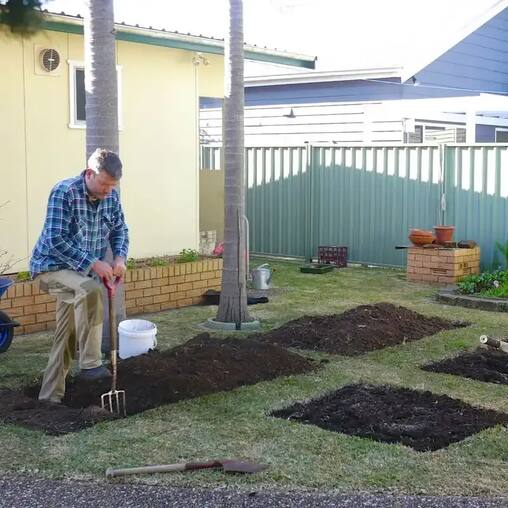
In-ground beds
In-ground or raised? How to decide, then three ways to make an in-ground bed: weed and plant, sheet mulch and double dig.
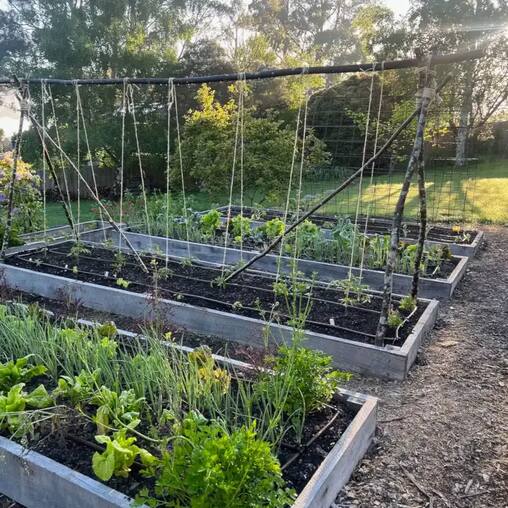
The pros and cons of raised beds, which materials are safe to use (and which to avoid), what to fill them with, and keeping them productive.
Video, 5:35
Downloads: Raised garden beds
No-dig gardening
No-dig, or lasagne gardening - less work and more veggies, and it suits just about any site, from rocky ground to soil that won't grow a thing.
Video, 6:41
Downloads: No-dig garden beds
Plan your garden bed layout
Back to your Bubble Diagram to plan your beds - sizes, paths, tools and materials - so you're ready to start building.
Written lesson
Downloads: How to plan your Bed Layout
Pema on wicking beds
No topsoil, not much sun and seriously rocky ground... Pema shows how she built wicking beds that thrive anyway, and how they work.
Video, 10:34Guest garden tour
Planning: what to grow when & whereWeek 3 · 5 lessons · 42 min
Now for the fun bit - deciding what to grow, and when and where to plant it, so there's always something coming on.
Working with your seasons & climate zone
How your climate zone, microclimates and seasons shape what you plant and when, plus a few hacks to stretch your growing season.
Video, 9:05
Downloads: RHS hardiness ratings
Annuals vs perennials
Annual, biennial or perennial? How each plant's life cycle shapes where it goes, how long it stays in, and how much one patch can give you.
Video, 7:21
Crop planning
Start your Crop List, group crops by plant family, get to grips with crop rotation, and draw up a Crop Plan for your first two seasons.
Video, 11:47
Downloads: Crop rotation · How to plan your planting · Vegetable Plant Families poster
Other planting considerations
Succession planting to stagger your harvests, and companion planting - what the science says, and which veggies do well together.
Video, 7:10
Gardening in transition with Farhat, SabarGul & Hajare
A visit to a community garden where new families from refugee backgrounds connect with their new home through food - what they grow, and how they cook it.
Video, 6:56Guest garden tour
Planting your veggie gardenWeek 4 · 5 lessons · 46 minplus an extra module
Seeds or seedlings? This week it's time to get planting, and to stay on top of the weeds as your garden grows.
Sourcing seeds vs seedlings
Which veggies to plant as seedlings and which to sow direct, where to source them, how to pick healthy ones, and F1 hybrid versus open-pollinated seed.
Video, 6:47
Planting seedlings
Harden off your seedlings, plant them at the right spacing, thin them out, decide whether to mulch, and protect them from pests.
Video, 9:25
Downloads: Planting your veggie garden
Planting direct-sow seeds
Sowing big seeds and small, overplanting as insurance, a nifty way to grow carrots, and planting potatoes, yams and garlic.
Video, 8:22
Weed management
Weeds are just plants out of place, and they can tell you a lot about your soil. Manage them organically before, during and after each crop.
Video, 9:52
Grant on caring for plants as they grow
Grant's hugely abundant garden is built to be accessible. He shares how he stretches his seasons, grows tomatoes and pumpkins, and interplants to make the most of his space.
Video, 11:08Guest garden tour
Raising seedlings
Optional extra module · 1 lesson · 11 min
Why buy seedlings when you can raise your own?
Raising seedlings
Make your own seed raising mix, sow at the right depth, give seedlings the light and water they need, pot them up, and fix the most common problems.
Video, 10:38
Downloads: How to raise your own seedlings · Growing great tomato seedlings - from the Milkwood book
Infrastructure for growing veggiesWeek 5 · 5 lessons · 36 min
With your veggies in the ground, it's time for a little infrastructure - water first, then supports, and ways to handle the heat and the cold.
Watering your veggies
How much water your veggies need, when to water, how to tell if they're thirsty, and options from hand watering and ollas to irrigation systems.
Video, 11:04
Downloads: Passive water management
Structures that support your plants
Supports for tomatoes, beans, peas and heavy climbers, growing up to double your space, and structures that shelter crops from heat, frost and pests.
Video, 7:55
Downloads: Support structures
Hot season solutions
A written guide to long, hot, dry spells - mulching, shading, and building beds and soils that hold on to water.
Written lesson
Cold climate solutions
A written guide to growing in the cold - starting early indoors and in cold frames, choosing plants that mature sooner, and cloches, greenhouses and hoop houses.
Written lesson
Tanya on infrastructure and planning for abundance
Tanya trades with other households and pays her rent with her labour. Her garden shows how sharing, scrounging and community add up to abundance.
Video, 16:53Guest garden tour
Feeding your soilWeek 6 · 5 lessons · 55 minplus an extra module
Feed your soil and your veggies will thank you! Brews, compost, worms and green manures, to pick and choose from.
Soil fertility & liquid fertilisers
Why and how we feed soil, soil feeders versus soil builders, the nutrients plants need, and simple worm and seaweed teas to brew at home.
Video, 10:53
Downloads: Feeding your soil
Cold composting
A low-effort way to turn kitchen scraps into garden gold - where to put it, what goes in (and what doesn't), when it's ready, and keeping vermin out.
Video, 9:36
Downloads: Feeding your soil
Worm farms
Worm castings and 'veggie rocket fuel'! How worm farms work, a bucket worm tower, a bathtub worm farm, and harvesting your castings.
Video, 10:22
Green manures
Give tired soil a rest with a green manure - cool and warm season mixes, and how to plant them and finish them off before replanting.
Video, 7:07
Sulyn on building soil health and compost tea
Sulyn shows you her soil-building systems and her compost tea set-up, for a sweet-smelling brew that kick-starts the life in your soil.
Video, 16:33Guest garden tour
Hot composting
Optional extra module · 1 lesson · 11 min
Fast, weed-free compost that's buzzing with life, if you're up for a bit more work.
Hot composting
How hot compost works, building and aerating a pile, what's going on as it heats up, and using, storing and troubleshooting your compost.
Video, 11:15
Downloads: Hot composting
Common pests & diseases for veggie growersWeek 7 · 3 lessons · 29 minplus an extra module
Pests and diseases are feedback from your garden. Build a resilient patch first, then deal with any unwanted visitors organically, step by step.
Building a resilient veggie garden
Why pests and diseases become a problem, how diversity and prevention build a resilient patch, and the step-by-step Integrated Pest Management approach.
Video, 10:14
Downloads: Common Pollinator and Beneficial Insects of Victoria · Beneficial Insects: Predators, Parasitoids and Pollinators
Diseases, pests & wildlife
Spotting the conditions that let pests and diseases take hold, treating and protecting your crops, and keeping birds, rabbits, possums and deer out of your patch.
Viv and Des fit raised beds, a hothouse, berries, a small orchard and a native garden around their compact townhouse, and deal with pests and disease organically.
Video, 8:28Guest garden tour
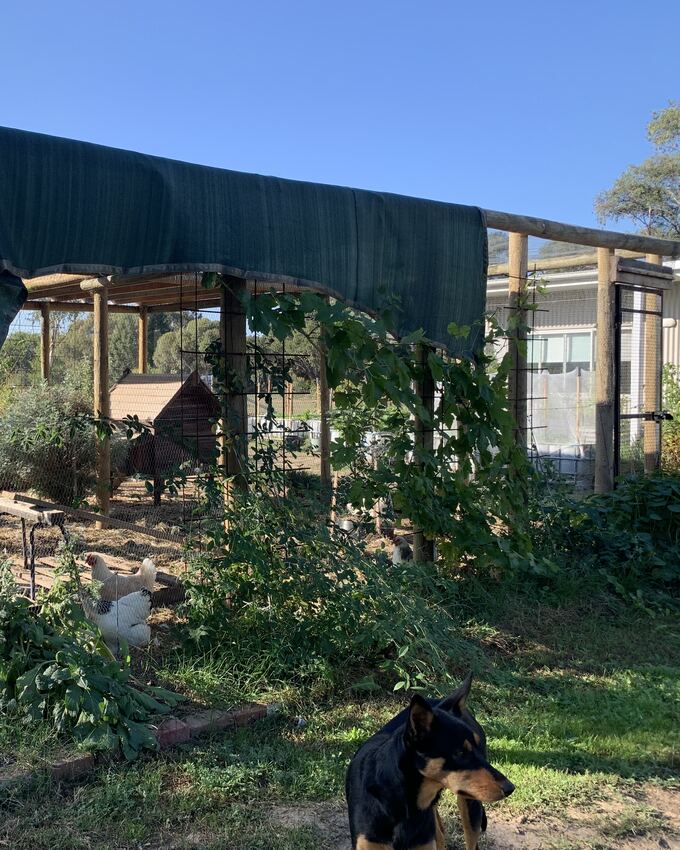
Chickens - your veggie garden's best friend
Optional extra module · 1 lesson · 8 min
Chickens eat your pests, turn your compost and fertilise your garden. And there are eggs!
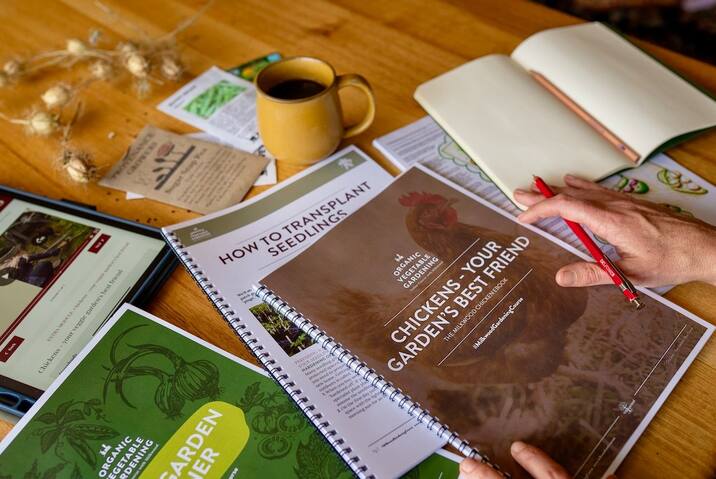
Chickens - your veggie garden's best friend
Set up a deep litter system with the chickens doing the hard work, build a chicken tractor to suit your space, and process chicken poo before it goes on the garden.
Video, 8:28
Downloads: The Milkwood Chicken eBook
Harvesting your veggiesWeek 8 · 2 lessons · 11 minplus 2 extra modules
Harvest time! Pick your veggies at their best, put your beds to rest at the end of the season, and plan where your growing goes next.
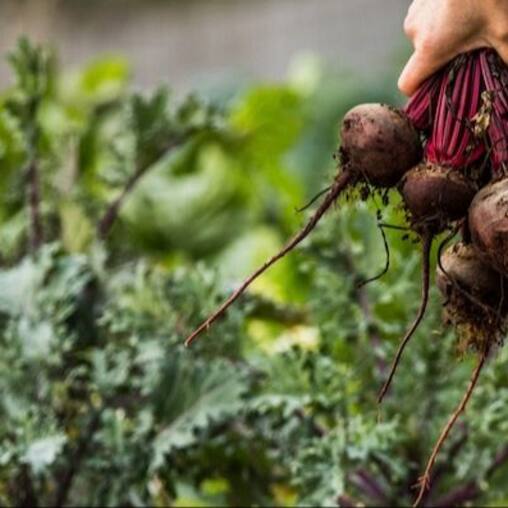
Harvesting your veggies
Harvesting tips for all sorts of veggies, what to do with your beds at the end of the season, and your certificate of completion.
Video, 11:17
Downloads: How to put your veggie beds 'to sleep'
Where to from here
Ways to keep growing - crop swaps, seed libraries, community gardens and permablitzes - and to keep sharing your garden in the community.
Written lesson
Preserving your harvest
Optional extra module · 2 lessons · 32 min
Another zucchini lurking in the patch? Turn a bumper harvest into something to enjoy all year.
Preserving your harvest
Kirsten shows you her favourite ways to preserve a bumper harvest, and the different techniques you can try.
Video, 15:53
Downloads: Tomatoes in the kitchen - from the Milkwood book
Urban Nanna on growing in pots & preserving spring onions
Anna shows you around her rental veggie patch, grown in no-dig pots, and whips up a dried, fermented spring onion preserve.
Video, 16:29Guest garden tour
Seed saving
Optional extra module · 2 lessons · 27 min
Save seed from your favourite veggies for next season, and share the abundance around.
Seed saving
Kirsten shares how to save different kinds of seed, avoid cross-pollination, tell when seed is ready, and label and store it.
Video, 15:11
Downloads: Tomato seed saving - from Permaculture Living
Heather & Kate on seed saving & community
Heather and Kate from the Cygnet Seed Library show you how a seed library works, and how shared seed builds a more resilient community.
Each with decades of food growing knowledge, and 80+ years of combined experience - here's the humans who will teach your course...
Hannah Moloney
Teaches your lessons
Hannah will teach your lessons and show you how to get designing and growing, with her infectious enthusiasm and gardening know-how. With a background in cultivating community, Hannah is a life-long gardener, best selling author of The Good Life, educator, and presenter on ABC's Gardening Australia.
Kirsten Bradley
Mentors you through the course
Kirsten will mentor you through your course, helping you to succeed and grow. She founded Milkwood with Nick in 2007. She is an experienced farmer, grower, beekeeper, pickler, teacher, life-long learner - and the author of best-selling books Milkwood, Easy Peasy, and Milkwood Permaculture Living Handbook.
Nick Ritar
Mentors you, design and irrigation
Nick will mentor you through your course, helping with your design and irrigation needs. He founded Milkwood with Kirsten in 2007. Since then, he has led over 2000 face-to-face students through their permaculture design journey - as well as farming, homesteading and parenting.
Milkwood has been featured in...
Frequently Asked Questions
Got questions? Here's the answers you seek...
Is this course self-paced?
Yes - you will receive a new module of video lessons, design tools and resources each week for 8 weeks, but you can take as long as you like to do the learning. You'll have lifetime access to all your course materials, and lifetime access to your student community, expert mentorship, and the ongoing live class meetups. Sweet!
Do I need a backyard to take this course?
This course is designed for folks with access to at least 10 square meters (100 square feet) of space to grow a garden - either at your place, or somewhere else - OR be in the planning/dreaming stage for that kind of growing space.
We do also have students that take our growing courses while they're in an apartment... who plan to grow in a community garden or allotment, or are planning to have growing space soon.
Because you really can't have too many skills for household resilience, and there's always a way and a space to use those skills, once you know what to do.
Can I use these skills in the climate / location that I live in?
This course is built for the temperate-ish parts of the world - cool temperate, temperate, warm temperate and sub-tropical. And for most arid regions too, as long as you can water your garden. If you're in Australia, that covers pretty much everywhere most of us live:
All of Tasmania and Victoria
The ACT and all of NSW - coast, tablelands, slopes and plains
South Australia, including Adelaide and the mid-north
The southern half of WA, including Perth, the south-west and the wheatbelt
South-east Queensland, up through the Sunshine Coast and out to the Darling Downs
The dry inland - Alice Springs, Broken Hill, Kalgoorlie and similar
And if you garden in the true tropics, like Darwin or Colombo? Or somewhere very cold, like northern Finland or Alberta? Well, we have students doing this course in all of those places already. About 80% of the course still applies to you - the design, the soil, the fertility, raising your seedlings, the harvest, and saving your own seed. You'll just be growing some different varieties. And you'll need a few more tricks for when the weather goes extreme.
We'll help you work those out as part of your mentorship, and point you at good information for your specific climate.
What are the exact course start and finish dates?
This class of Organic Veggie Gardening course will begin onThe next class of our Organic Veggie Gardening course starts onMonday 7 December 2026(Sydney time).
You'll receive new lessons each week for 8 weeks, and ongoing access to your course materials & garden mentorship, so you can take as long as you like.
If you're a keen bean but now's not quite the right time (we get it), fear not - you can spread the cost over three payments, and we have Fair Share rates for folks who need them. And if this season just isn't yours, that's totally ok. We open this course once a season, and the next class opens for bookings on Monday 8 February 2027(Sydney time).
How do the Live Class Meetups work?
All students are able to ask questions inside each lesson, and get answered by our team within a day or so. Your student community is another place you can ask Qs, share pics of your garden, celebrate wins and brainstorm solutions.
The Live Class Meetups are a face-to-face video call, hosted within our course hub, which happen every two weeks. We'll notify you when each call is coming up - join if you can, but if you miss it, no worries - catch the replay!
The live class calls are at a mix of times, to suit more timezones - we rotate between 9am, 12pm and 6pm Sydney time.
All students get access to our archive of previous class call recordings as well, which are a treasure-trove of great answers (and questions) all about learning to grow.
Does the course have closed captions? (CC)
Yes, it does! All videos are fully captioned and the captions are searchable.
How much time will the course take each week?
We recommend you set aside 1-2 hours a week to do this course, to get the most out of your learning experience.
The amount of time you spend actually 'doing the things' and designing, planning, creating and growing your garden is in addition to this.
What does 'lifetime access' mean?
Lifetime access means you will be able to access this course, and all its resources, for as long as we have it available online.
Milkwood has been delivering stellar courses since 2007 - and we're not going anywhere, anytime soon.
This is a long-haul commitment for us, and for our family business. No tricks, no fine print. We want you to have access to this knowledge for as long as you need.
Can I get help paying for this course?
Quite possibly, yes! There are a few ways in:
NDIS: if your plan is self-managed or plan-managed, it can pay for this course, as long as the course fits the goals in your plan. Here's how it works, and how to request an invoice: milkwood.net/ndis
Farm Household Allowance: your $10,000 Activity Supplement can pay for it too. Just email your case officer before you enrol... we've written that email for you, and put together everything they need from us: milkwood.net/fha
I've never gardened before. Are there any prerequisites or required reading?
We've made this course for anyone who wants to get started with growing veggies, regardless of how much or how little you might already know.
There are no prerequisites or required reading. No previous experience is necessary - we'll walk you through the whole process, and we can answer any questions that arise.
Just bring your enthusiasm.
Do I need any special technology to access the course?
Nope! If you can view this page and the video on it, you can access the entire course just fine.
The course is delivered via our special course portal, web pages and email.
You can access your course hub and private community (which is not on facebook!) via any web browser on any laptop, PC, Mac, tablet or smart phone that is connected to a reasonable internet connection.
You don't need any other special applications or memberships to other platforms. You are not required to have a Facebook or Google account.
It's simple and easy.
Will I receive a certificate at the end of the course?
Yes, you will! We send you a Certificate of Completion once you finish the course.
What's the refund policy for this course?
We'll do our best to make your course the best experience we can. However, it just might not be for you. That's ok! If you decide that's the case, let us know.
Notify our team within 30 days of your purchase and we'll refund your payment. No questions asked.
Please note that the 30-day money-back guarantee applies for the online component of your purchase only. Books, postage or personal coaching calls that have already been supplied or attended as part of the Fast-Forward option are not refundable.
So - ready to grow?Join us next season
Bookings close on Monday 30 November, 5 pm(Sydney time), and the class starts on Monday 7 December(Sydney time), so there's still time to get your beds ready before your first lesson lands.
Your place is ready, and we can't wait to see you in the class on Monday 7 December(Sydney time).
30-day money-back guarantee. If the course isn't right for you, just let us know within 30 days of booking and we'll refund you, no questions asked.
We open this course once a season, and the next class opens for bookings on Monday 16 November(Sydney time). Join the waitlist and you'll get early access, to secure your spot before anyone else.Join the waitlist and we'll let you know the moment bookings open.
Any questions at all? Get in touch - we're here for you.